

Shop · Fire Pit Cooking
Dinner over live fire.
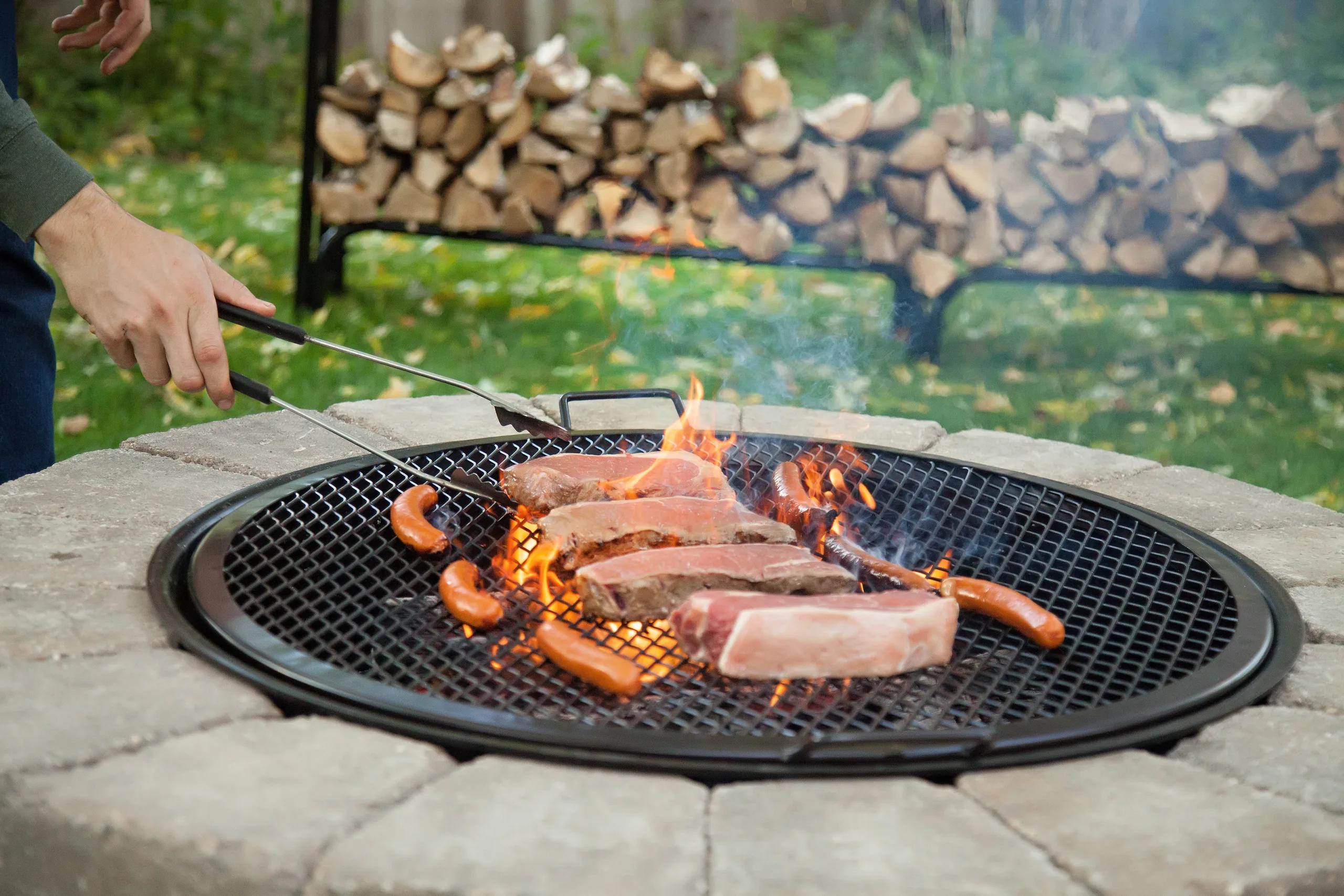
Fire cooks differently than a gas burner. The heat moves, the coals shift, and cooking well over it means being able to move with it. Grates that sit across the pit for working directly over the coals. An adjustable Santa Maria grate you raise and lower to find the heat rather than guess at it. A carbon steel skillet for everything that would fall through a grate. Roasting sticks that keep your hands back from the fire, gloves for when they cannot, and an insulated blanket to rest a brisket while everyone finds a chair.
Fire Pit Cooking


Save $59.96
The Fireside Cooking Kit: Fire Pit Cooking Grate Set


Insulated BBQ Blanket for Brisket & Turkey


Wait for the coals
The single most common mistake is cooking too early. A wood fire is ready when the flames have dropped, the wood has broken into chunks that glow orange under a grey skin, and you can hold a hand six inches above for three or four seconds. That is a medium fire. Dancing flames are for watching, not for cooking.
Build a hot side and a cool side
Rake the coals to one side of the pit and leave the other side bare. You get a side to sear on and a side to move things to when the outside is done before the inside is. This is the whole technique behind cooking anything thicker than a burger over wood.
The wood is an ingredient, not just fuel
This is the part that separates cooking over a fire pit from cooking in a smoker, and almost nobody says it out loud. In a smoker, charcoal gives you heat and a few wood chunks give you flavor, and you control them separately. Over an open fire the same wood is doing both jobs at once. Dial the smoke down and you dial the heat down with it. That means you choose the wood before you light anything, because by the time you can taste it the decision is an hour old.
Oak is the default for a reason. It burns long, holds a steady bed of coals and gives a heavy, straightforward smoke that suits beef and anything you want to taste like fire. Fruit woods are lighter and sweeter and suit pork, poultry and anything you do not want to overwhelm. Hickory is strong enough to take over a dish if you let it. Softwoods and anything resinous will put a taste on the food you will remember for the wrong reason. Green wood is the worst of both: it smokes hard, never gets hot, and the smoke is acrid rather than sweet.
The practical version: pick the wood for the protein, build the fire bigger than you think you need, and wait. You are cooking on the coals that wood leaves behind, so the species decided the flavor before the food ever came out of the fridge.