
Choosing the right fire pit grate: what actually matters
October 20264 min read
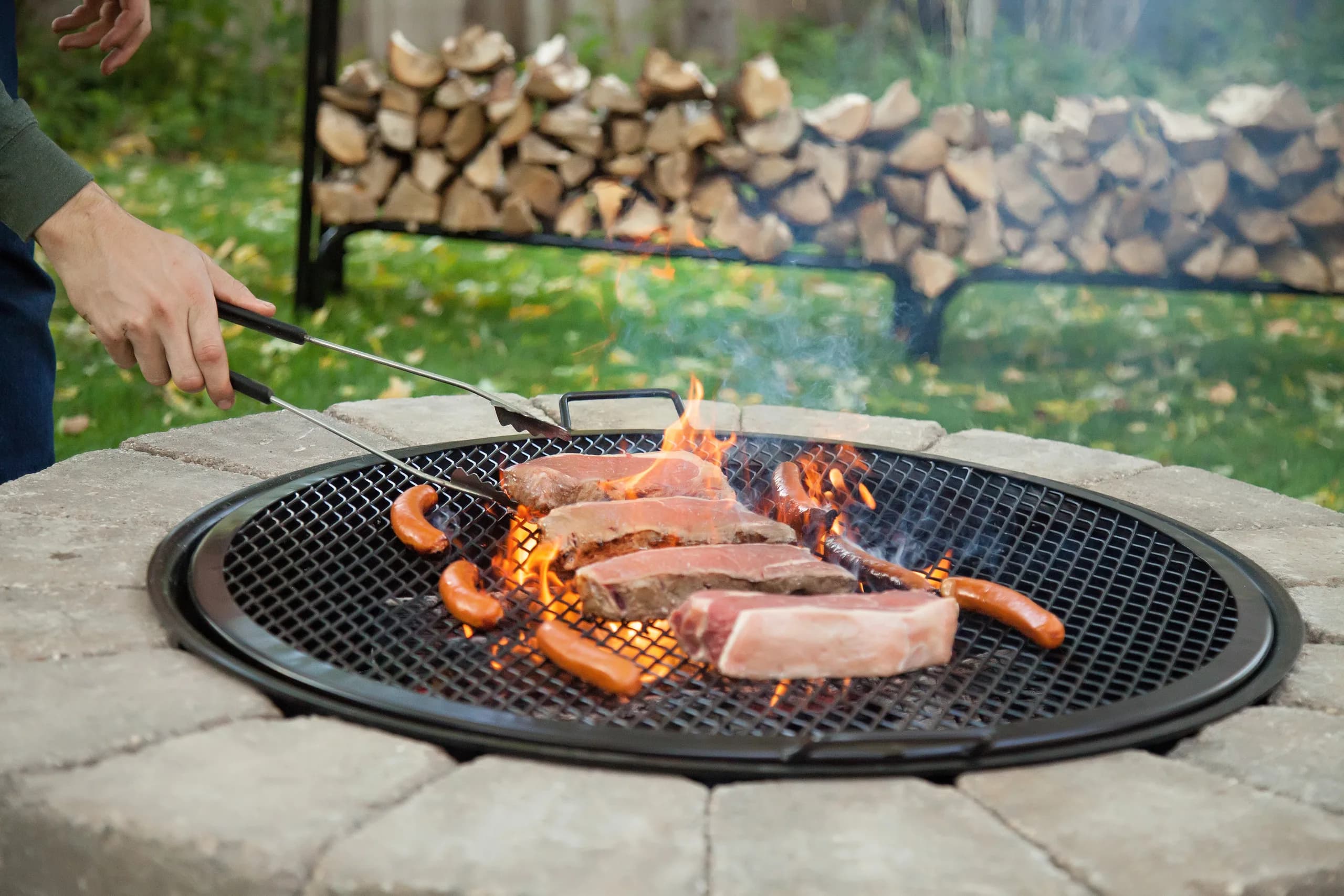
A fire pit grate is not an accessory. It is the difference between a fire that breathes and one that suffocates, between coals that glow and ones that smolder under ash. The grate elevates the logs, lets air move underneath where combustion is happening, and transforms a bare concrete ring into a complete system. The choice of grate decides whether your fire runs hot and clean or fights you every evening.
The grate is not optional. It is the foundation that everything—cooking, ambiance, safety—is built on.
Most people buy a grate once and keep it for decades, so the choice matters. This guide walks you through what the specifications actually mean, which differences are real, and which are marketing.
Steel thickness: why it matters
A grate made from thin sheet steel will warp under heat, twist under the weight of logs, and develop weak spots where coals rest. Heavy steel, typically 3/8-inch or thicker, holds its shape through thousands of fires. The thickness difference is small in inches but enormous in performance: light grates flex, heavy grates last. Specification sheets list gauge or thickness; look for solid stock that will not flex when you press on it with your hand.
Material matters too. Carbon steel holds heat and develops patina. Cast iron does both even better and is virtually indestructible, but it is heavier and takes more care (the routine from 'Built to Last is a Two-Way Deal' applies even more strictly). Stainless steel resists rust completely but is expensive and does not heat-store as well. Most working grates are heavy carbon steel: the middle ground of performance, cost, and care.
Airflow design: spacing and elevation
The grate's whole job is to get air under the fire. That means two things: height off the pit floor and spacing between bars. A grate sitting one inch up gives coals air underneath; a grate sitting three inches up gives that air room to move and lets ash fall through. Spacing between bars should be wide enough that ash drops but logs do not sag through; typically 1/2-inch to 1-inch is the working range. Bars that are too close starve the coals; bars that are too wide let fuel fall through.
Curved or tapered bars are a design detail, not a performance difference. Straight bars are simpler and work fine. Grates with handles or feet are convenience; they do not change the burn, but lifting a grate safely is real work, so handles matter if you are moving it often.
Fire pit vs. cooking grate: different jobs
A fire grate is built for ambiance and warmth: the goal is a clean, steady coal bed that lasts hours on moderate wood. A cooking grate is built for heat and precision: it needs to handle high temperatures, the thermal shock of food hitting hot steel, and the aggressive cleaning that cooking demands. Fire grates are typically smaller and sit lower; cooking grates are wider, sit higher, and use thicker material. Some grates are designed for both and do both adequately but master neither. Know what you are optimizing for.
If you cook regularly, a dedicated cooking grate is worth the investment. If you roast marshmallows once a month, a fire grate that cooks adequately is fine. You can own both—a fire grate in the pit most days and a cooking grate swapped in for dinner night.
Size and fit: measure your pit
Fire pit rings come in standard sizes: 24, 30, and 36 inches in diameter. A grate must fit inside the ring and sit on ledges or a supporting frame built into the ring itself. Some grates rest on the ring's inner lip; others sit on brackets or feet. Measure your pit's inside diameter and the height of any supporting features before ordering. A grate that is a quarter-inch too large will not fit; one that is a quarter-inch too small will rock and collapse under weight.
Care and longevity
A grate that gets a burn-off after cooking (five minutes over hot coals to carbonize residue) and a brush to knock away ash, then stored under cover, will last decades with no maintenance. The grate from 'Built to Last is a Two-Way Deal' applies in full: dry storage, occasional oil on carbon steel, nothing complicated. A grate left in a wet ash bed all winter will rust; the same grate brought inside between fires will outlast you.